

The story of Bannockburn is the story of how Scotland, against overwhelming odds, secured one of its most decisive and identity‑defining victories. Here’s a clear, structured account of what happened, why it mattered, and how it shaped Scotland’s future.
🛡️ What Bannockburn Was
The Battle of Bannockburn (23–24 June 1314) was fought between Robert the Bruce, King of Scots, and Edward II of England during the First War of Scottish Independence. It ended in a decisive Scottish victory that transformed the political future of Scotland.
⚔️ Why the Battle Happened
- In 1313, Bruce demanded that all nobles still loyal to the deposed King John Balliol switch allegiance or lose their lands.
- The English still held Stirling Castle, a crucial stronghold. Its defenders promised to surrender if not relieved by 24 June 1314.
- Edward II marched north with one of the largest armies ever sent into Scotland—around 20,000–25,000 men—to break the siege.
Bruce, with perhaps 6,000–8,000 Scots, prepared to block him.
🌲 How Bruce Won: Strategy and Terrain
Bruce chose ground carefully: the New Park, a wooded hunting preserve south of Stirling. This terrain:
- funneled English cavalry into narrow spaces
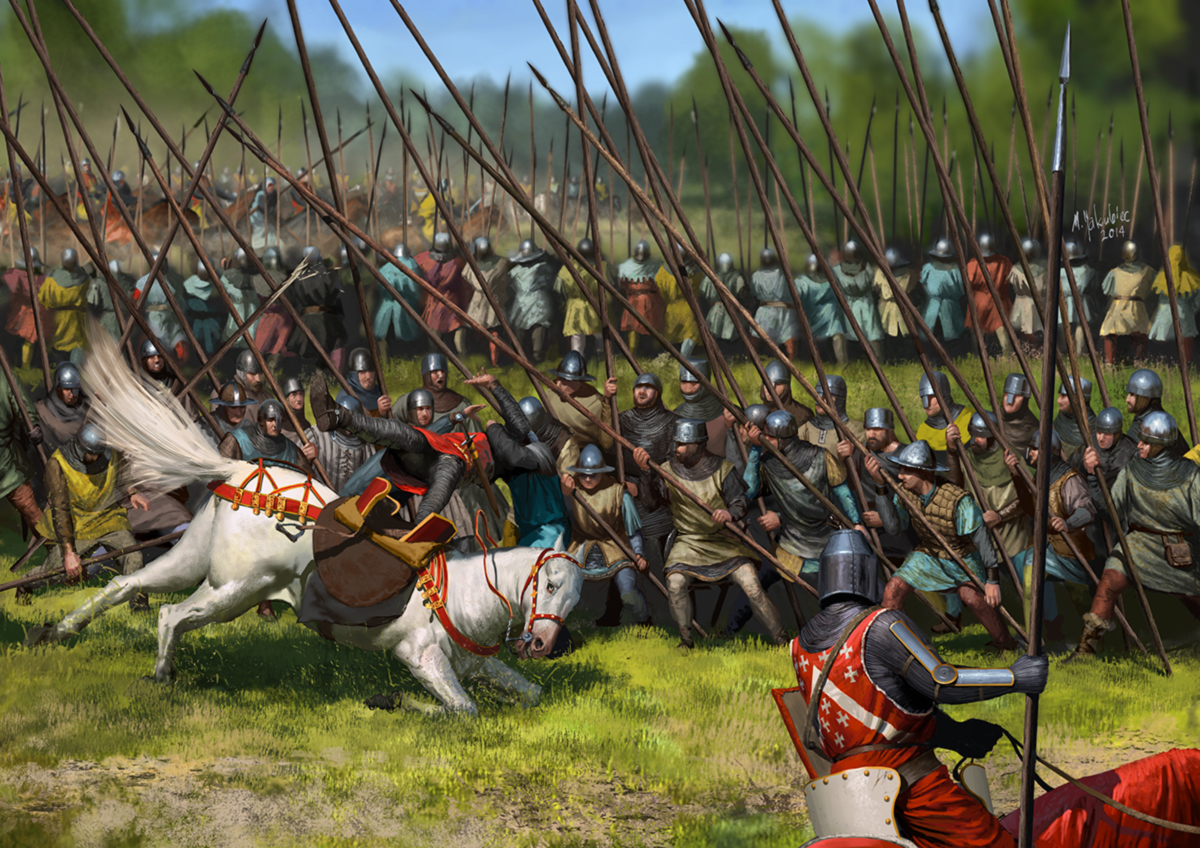
- allowed Scots to use schiltrons—tight formations of pikemen—to devastating effect
The Scots were heavily outnumbered, but Bruce’s tactical discipline and use of terrain neutralised the English advantages.
🗡️ Day One: The Turning Point
On 23 June:
- English cavalry attempted to break through.
- Bruce personally killed the English knight Sir Henry de Bohun with a single axe blow—an act witnessed by both armies and hugely boosting Scottish morale.
- English attacks stalled; they withdrew for the night.
⚔️ Day Two: Collapse of the English Army
On 24 June:
- The Scots advanced in disciplined schiltrons.
- English formations became crowded, confused, and unable to manoeuvre.
- Panic spread; many English soldiers fled or drowned trying to escape. Casualties were enormous—up to 15,000 killed or drowned.
- Edward II himself fled the field and never returned to Scotland.
🏴 Why Bannockburn Matters
Bannockburn was more than a battlefield victory:
1. It secured Bruce’s kingship
After the battle, European powers increasingly recognised Robert the Bruce as the legitimate King of Scots.
2. It led to Scottish independence
The war ended 14 years later with the Treaty of Edinburgh–Northampton (1328), formally recognising Scotland as an independent kingdom.
3. It became a national symbol
Bannockburn stands as a defining moment of Scottish resilience, unity, and identity—celebrated in culture, song, and national memory.
🧭 In Short
Bannockburn is the story of:
- a vastly outnumbered Scottish army
- a king who understood terrain, morale, and timing
- a battle that reshaped the destiny of a nation
It remains one of Scotland’s greatest victories—an enduring symbol of independence and national pride.


