

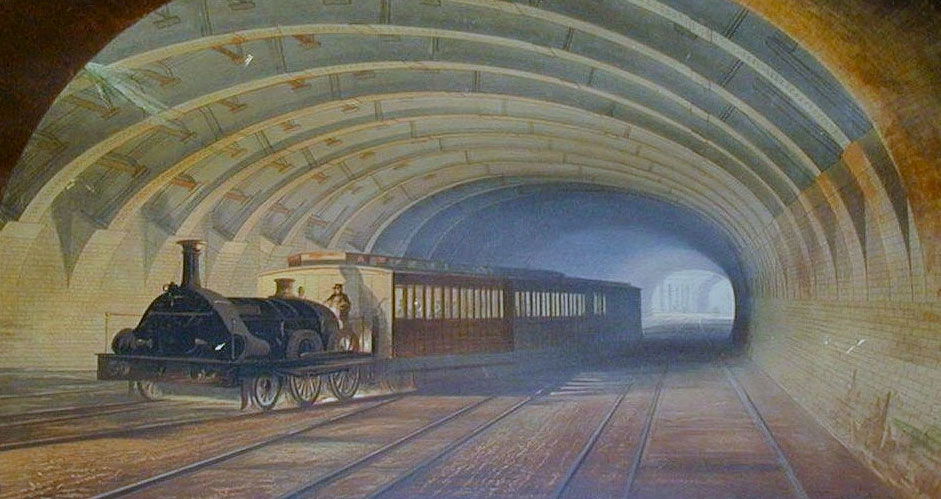
On January 10, 1863, the Metropolitan Railway opened the world’s first underground railway in London. This historic event marked the beginning of a transportation revolution. Here are some fascinating details about this groundbreaking achievement:
- The Metropolitan Railway: The Metropolitan Railway, also known as the Met, was the pioneer in underground rail travel. It covered a 3.75-mile (6 km) stretch between Paddington (then called Bishop’s Road) and Farringdon Street. The initial section used steam locomotives to haul wooden carriages, and it was hailed as a success. On its opening day, it carried an impressive 38,000 passengers and even borrowed trains from other railways to supplement its service 12.
- Gas-Lit Wooden Carriages: Imagine stepping into gas-lit wooden carriages, the precursor to today’s modern subway cars. These early trains provided a novel way for Londoners to travel underground, avoiding the bustling streets above.
- The Circle Line Completion: The Metropolitan Railway collaborated with the District Railway to complete London’s Circle line in 1884. This joint effort connected various parts of the city, creating a circular route that allowed passengers to circumnavigate central London.
- Expansion and Electrification: Over time, more lines were added to the Underground network. The City and South London Railway (the first deep-level tube line) opened in 1890 with electric trains. Subsequent lines included the Waterloo & City Railway (1898), the Central London Railway (1900), and the Great Northern and City Railway (1904).
- Underground Electric Railways Company of London (UERL): In 1902, the UERL was established to fund the electrification of the District Railway. It also completed and operated three tube lines: the Baker Street and Waterloo Railway, the Charing Cross, Euston and Hampstead Railway, and the Great Northern, Piccadilly, and Brompton Railway. These lines opened during 1906–1907 and significantly expanded the Underground network.
- Joint Marketing and the Iconic “UNDERGROUND” Signs: In the early 20th century, a joint marketing agreement led to the appearance of iconic “UNDERGROUND” signs outside stations in central London. These signs became synonymous with the London Underground.
- Post-World War I Expansion: After World War I, government-backed financial guarantees facilitated further expansion. The Northern line emerged from the linking of tunnels between the City and South London Railway and the Charing Cross, Euston, and Hampstead Railway.
- Formation of the London Passenger Transport Board (LPTB): In 1933, the underground railways, along with all London area tram and bus operators, were merged into the LPTB. This consolidation streamlined operations and set the stage for future developments.
The London Underground’s rich history continues to shape urban transportation, and its legacy as the world’s first metro system remains unparalleled.
 Brain disorders & other General topics of the day